



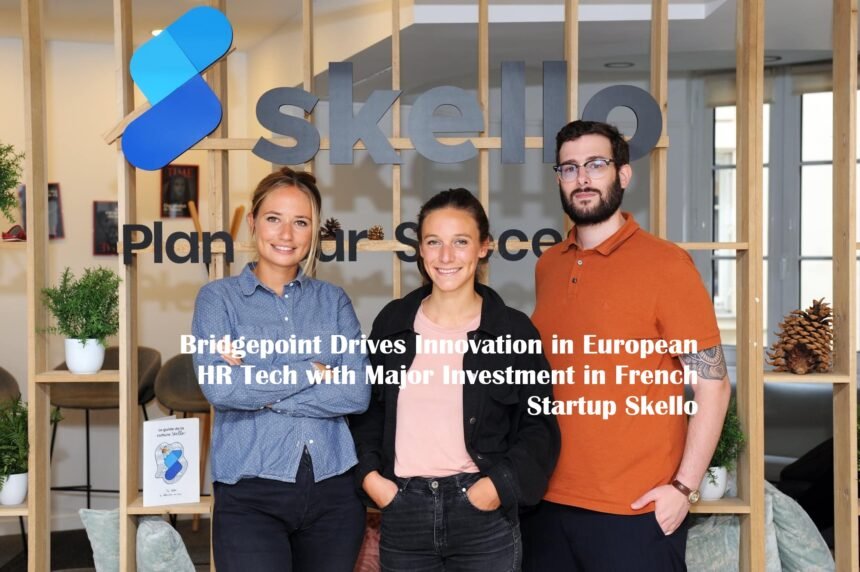
The European technology sector has witnessed another substantial financial milestone in the human resources management industry. Bridgepoint, a prominent private equity firm, is leading a major funding round worth 200 million euros for Skello. Skello operates as a highly successful French human resources technology company that specializes in artificial intelligence tools.
This transaction positions Bridgepoint as the primary minority shareholder within the growing business. A source close to the matter disclosed these specific details because the companies have not made a public declaration yet. This massive financial injection reflects a growing confidence among global investors regarding digital workplace solutions.
Companies across Europe are rapidly modernizing their daily operations to increase productivity and maintain strict compliance with labor laws. The private equity giant will deploy capital through its specialized lower-middle-market investment vehicle. This vehicle bears the name Bridgepoint Development Capital V.
The firm recently utilized this identical fund in November 2025 to support another French enterprise named Brevo. This repeating pattern demonstrates a clear commitment to nurturing the local digital ecosystem in France. Skello intends to leverage these new resources to secure its dominant market share domestically.
Additionally, the startup aims to execute an aggressive expansion plan across neighboring European countries. The management team wants to accelerate recruitment efforts during the second half of 2026. They plan to focus heavily on hiring artificial intelligence specialists to improve their software capabilities.
Empowering Frontline Workers Through Advanced Digital Planning Tools
Skello provides a comprehensive cloud-based platform that transforms how traditional businesses manage shift-based employees. The software enables companies to optimize staff scheduling, monitor attendance patterns, coordinate complex shift rotations, and ensure regulatory compliance. The platform serves sectors that rely heavily on hourly workers.
These industries include hospitality, retail commerce, healthcare networks, and complex logistics operations. Traditional administrative workflows often consume excessive time and create operational bottlenecks for managers. Skello solves this problem by automating repetitive administrative tasks.
This automation allows business owners to focus on strategic growth and customer satisfaction. The demand for digital workforce management software has escalated rapidly over the past few years. Modern managers require real-time visibility into their labor costs and operational efficiency.
The software calculates complex working hours automatically while keeping track of local employment regulations. This capability reduces human error significantly during the payroll preparation process. Frontline employees also benefit from this digital transition.
Workers can access their schedules through a mobile application instantly. They can request shift changes, log their working hours, and communicate with managers easily. This transparency fosters a healthier workplace culture and reduces employee turnover rates in high-stress industries.
Strategic Reinvestment Demonstrates Strong Internal Corporate Confidence
The current 200 million euro funding round features a unique structural arrangement that showcases immense internal confidence. The founders of Skello are reinvesting their personal capital back into the enterprise. Furthermore, the existing executive management team and several early-stage investors are joining this reinvestment initiative.
This collective decision means that the internal leadership will actually increase its total ownership stake. Such actions send a strong positive signal to the broader financial market. It proves that the individuals who run the company believe deeply in its future growth trajectory. They are willing to risk their own capital alongside institutional investors.
This massive round follows an earlier successful fundraising effort that occurred several years ago. Skello previously secured 40 million euros during a Series B funding round in 2021.
That historical round was led by Partech, a well-known venture capital firm. Other early investors like XAnge and Aglae Ventures also participated in that specific growth phase. The transition from a 40 million euro round to a 200 million euro round shows incredible growth.
The company has successfully scaled its operations and validated its business model. It has grown from a promising local startup into a major regional competitor. This financial trajectory underscores the massive scalability of enterprise software solutions that generate predictable subscription revenue.
Artificial Intelligence Reshapes the Future of Workplace Administration
The primary catalyst for Skello’s future expansion revolves around the integration of advanced artificial intelligence technologies. Artificial intelligence can analyze vast amounts of historical scheduling data to predict future staffing requirements. For example, a restaurant can use the software to predict busy weekend shifts based on seasonal patterns.
The platform can then suggest an optimized staff schedule automatically. This predictive capability prevents both understaffing and excessive labor expenditures. It helps businesses maximize their profit margins in highly competitive market sectors. Hiring top-tier artificial intelligence talent will represent a primary objective for the company in late 2026.
The technology sector faces intense competition for software engineers who understand machine learning protocols. Skello plans to establish a dedicated research and development hub to foster continuous software innovation. This hub will develop proprietary algorithms that can automate complex compliance tracking across multiple jurisdictions.
Different European countries maintain distinct labor laws, maximum working hour limits, and mandatory rest periods. An intelligent software system can adjust to these variations seamlessly. This makes international expansion much easier and less risky for the parent company.
Navigating European Expansion Challenges Amid Intense Market Competition
Expanding a software business across European borders requires a deep understanding of local market dynamics. Each country possesses a unique corporate culture and distinct technology adoption rates. Skello will face competition from both local software providers and established global enterprise platforms.
To win market share, the French startup must maintain its agile approach to product development. It must tailor its user interface to meet the specific cultural expectations of diverse workforces. The current capital injection provides the financial cushion necessary to survive intense marketing battles.
The broader macroeconomic environment also introduces elements of uncertainty for growing technology firms. Investors have become more selective about capital allocation over the past few years. They now prioritize companies that can demonstrate a clear path to profitability alongside rapid revenue growth.
Skello has managed to attract this massive investment because it possesses strong fundamentals. Its recurring subscription model provides stable cash flows that insulate the business from sudden market downturns. The partnership with an experienced private equity firm like Bridgepoint will also provide valuable strategic guidance.
Bridgepoint understands how to scale mid-sized companies into pan-European leaders. The long-term success of Skello will depend on its ability to execute its strategic plans efficiently.
Capital alone does not guarantee market dominance in the fast-moving software industry. The company must scale its customer support teams alongside its engineering department. Frontline businesses require rapid assistance when technical issues arise during busy operational shifts.
Providing excellent customer service will help the firm maintain high retention rates among its corporate clients. It will also build a strong brand reputation through positive word-of-mouth recommendations. Furthermore, the executive leadership must manage the corporate culture carefully during this period of rapid headcount growth.
Internal alignment can suffer when a company hires hundreds of new employees within a short timeframe. The founders must preserve the core values that enabled their initial success. They must foster collaboration between the original team members and the newly hired artificial intelligence specialists.
If the company can maintain its innovative spirit while scaling its operations, it will establish a permanent foothold at the top of the European human resources technology sector. This transaction will likely inspire other local software developers to pursue ambitious international expansion goals.