


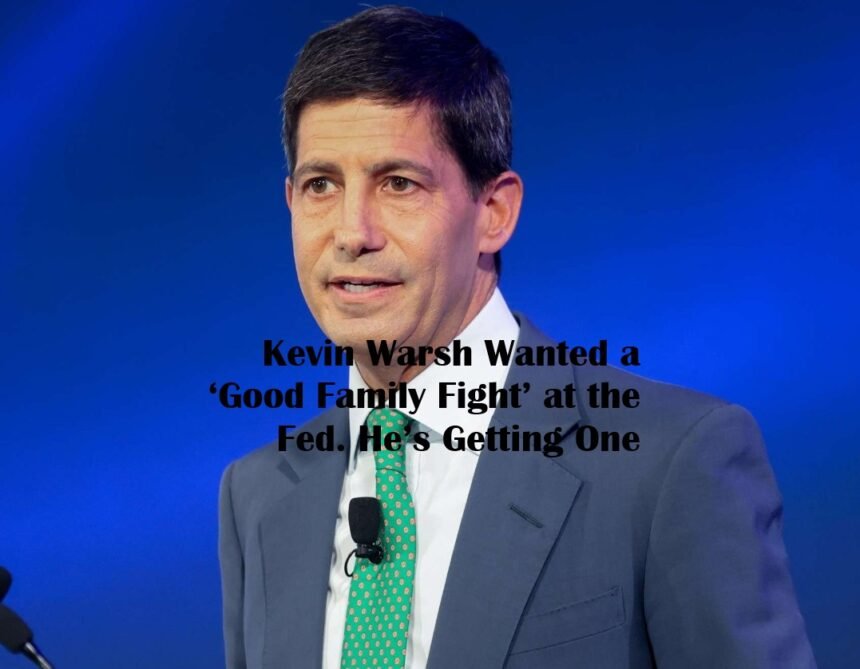
Federal Reserve Chairman Kevin Warsh frequently predicted that his tenure would bring a spirited debate among policymakers. Since his nomination process, Warsh repeatedly welcomed an internal debate, what he famously called a “good family fight” to challenge long-standing economic assumptions.
As the Federal Open Market Committee (FOMC) gathers for its latest policy deliberations, Warsh is getting precisely what he asked for as deep ideological divisions emerge within the central bank. The looming debate marks a major turning point for Warsh during his early months leading the Fed.
After succeeding Jerome Powell, Warsh signaled a clear desire to overhaul central bank operations, reshape monetary policy communications, and reduce reliance on quantitative easing. However, persistent inflationary pressures and diverging economic perspectives among Fed officials are turning abstract policy debates into intense votes.
Rising Hawkish Dissents and The End of Policy Unanimity
While Warsh’s initial policy meeting ended in a unanimous vote to hold interest rates steady, internal cohesion has frayed rapidly. Economists expect multiple regional Fed presidents to record formal dissents against maintaining current borrowing costs.
Prominent policymakers, including Cleveland Fed President Beth Hammack and Dallas Fed President Lorie Logan, have signaled growing impatience with elevated inflation figures. Beth Hammack recently noted that both corporate executives and consumers are losing patience with persistent price increases across the economy.
Similarly, Fed Governor Chris Waller argued that the central bank cannot simply observe price pressure and hope inflation vanishes over time. These hawkish voices argue that the Fed must take aggressive steps to curb price growth, setting up a direct conflict with officials who prefer a more cautious stance.
- Elevated Energy Costs: Renewed volatility in oil markets keeps headline inflation sticky.
- AI Infrastructure Demand: High semiconductor prices drive persistent technology equipment costs.
- Divided Committee Votes: Projected dissents threaten to break traditional consensus voting.
- Evolving Inflation Frameworks: Debates focus on whether to measure core or trimmed-mean metrics.
Redefining Federal Reserve Communication and Transparency
Warsh has already initiated significant changes to how the Federal Reserve interacts with financial markets and the public. During recent policy cycles, Warsh shortened official policy statements and abstained from providing granular forecasts in the Summary of Economic Projections. He firmly believes that the central bank should provide less forward guidance, forcing market participants to interpret economic data independently. For decades, investors relied heavily on explicit signals from Fed leaders to forecast interest rate decisions.
Warsh’s philosophy breaks from this traditional approach, intentionally introducing an element of policy unpredictability. While supporters argue this approach prevents market distortions, critics worry that reduced transparency could trigger unnecessary market volatility during economic stress.
Balancing Inflation Realities with Political and Economic Pressures
The internal policy debate arrives at a sensitive moment for the central bank as inflation remains above the preferred 2% annual target. Recent government economic reports indicated persistent cost increases across consumer goods, testing the Fed’s resolve.
At the same time, central bankers face heightened political scrutiny as national elections approach and lawmakers debate economic performance. During recent testimony before Capitol Hill, Warsh defended the central bank’s institutional independence while reassuring lawmakers of his commitment to price stability. He reiterated that the Fed maintains a zero-tolerance policy for entrenched inflation. However, translating that commitment into concrete rate decisions requires navigating a divided committee where consensus no longer comes easily.
- Assessing Economic Signals: Weighing cooling employment against stubborn inflation metrics.
- Managing Balance Sheet Reductions: Accelerating the unwinding of central bank assets.
- Navigating Political Scrutiny: Maintaining institutional independence during congressional hearings.
- Managing Internal Policy Rifts: Harmonizing divergent interest rate views among governors.
Long-Term Implications for Monetary Policy and Markets
The emerging “family fight” demonstrates that Kevin Warsh is successfully pushing the Federal Reserve away from past consensus-driven norms. By encouraging robust internal debate, Warsh aims to prevent groupthink and modernize how the central bank responds to complex economic shocks. However, managing a divided committee tests his leadership skills in real time. As financial markets adjust to less explicit forward guidance and a more divided FOMC, investors must navigate higher market volatility.
The debate over interest rates, balance sheet contraction, and inflation measurement will define Warsh’s legacy as Fed Chair. The vibrant internal argument he originally sought is now fully underway, reshaping the future direction of American monetary policy.