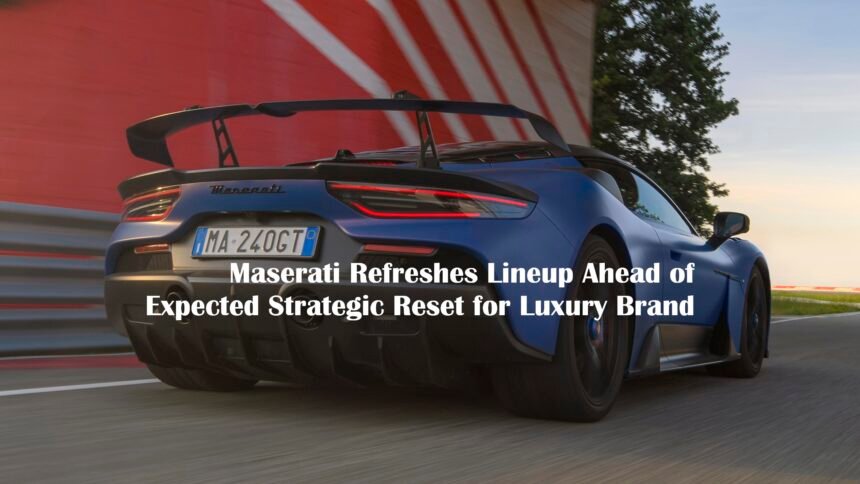
Maserati has introduced a refreshed range of vehicles as the Italian luxury automaker prepares for a broader strategic reset expected later this year. The move signals the brand’s determination to strengthen its position in the premium automotive market after a challenging period marked by declining sales and financial pressure.
The updated lineup includes revised versions of the GranTurismo coupe, GranCabrio convertible, and Grecale SUV. These models bring design enhancements, technology upgrades, and performance improvements. The refresh arrives ahead of a dedicated investor event scheduled for December, when Maserati is expected to reveal a comprehensive strategy for its future.
Industry observers view the product update as an important step in rebuilding confidence around the luxury marque. Maserati remains the only luxury brand within the Stellantis portfolio, giving it a unique role in the group’s long-term ambitions.
Focus on Product Strength and Brand Identity
The refreshed vehicles showcase Maserati’s effort to reinforce its identity as a premium performance brand. The GranTurismo and GranCabrio now feature improved electric driving range and an upgraded version of the company’s six-cylinder engine.
The enhanced powertrain delivers approximately 590 horsepower, providing stronger performance while maintaining the brand’s signature driving character. Maserati has also expanded the use of this engine within the Grecale lineup, offering customers additional options across different vehicle categories.
Beyond performance upgrades, the company has refined styling elements throughout the range. Exterior revisions create a more modern appearance, while interior enhancements improve comfort and digital functionality. These changes aim to keep the vehicles competitive in a luxury segment where customer expectations continue to rise.
Preparing for a New Chapter
The product refresh comes at a critical moment for Maserati. The brand has struggled in recent years as luxury buyers faced growing choices from established European competitors and emerging premium manufacturers. Financial results have reflected these challenges.
Maserati recorded significant operating losses while vehicle shipments declined sharply. The poor performance has prompted Stellantis executives to review the brand’s strategy and develop a recovery plan. Despite speculation about the company’s future, Stellantis leadership has repeatedly emphasized that Maserati remains an important asset.
Executives have rejected reports suggesting the luxury brand could be sold. Instead, management appears focused on creating a sustainable path forward through product investments, operational improvements, and strategic partnerships.
Strategic Plan Expected in December
A major turning point could come in December, when Maserati unveils its dedicated business strategy. Company leaders have indicated that the plan will address much more than vehicle launches. The upcoming roadmap is expected to cover dealer relationships, customer service improvements, and long-term product development.
Executives believe these areas are essential for strengthening the ownership experience and rebuilding trust among luxury buyers. Industry analysts will closely examine how Maserati intends to balance traditional combustion engines with electric technology.
Luxury consumers continue to demand performance, exclusivity, and innovation, creating a complex environment for premium automakers. The December presentation may also provide greater clarity on future models that will expand the brand’s portfolio in the coming years.
New Vehicles on the Horizon
Stellantis has already signaled that Maserati will receive additional investment through the end of the decade. Plans reportedly include the introduction of two large new vehicles and a completely redesigned version of the Grecale SUV by 2027. These future products could play a decisive role in determining whether the luxury marque can regain momentum.
New launches often attract fresh customers while generating renewed interest among existing owners. For Maserati, expanding the lineup is especially important because the brand currently operates with a relatively small range of vehicles compared with many competitors. A broader portfolio could help the company reach more luxury buyers while preserving its exclusive image.
Partnerships Could Support Growth
Another key component of Maserati’s transformation involves technology partnerships. Stellantis Chief Executive Antonio Filosa recently confirmed discussions with two potential partners. The negotiations focus on improving electronic architecture and sourcing advanced components that can strengthen future vehicles.
Company leaders have not disclosed the identities of the potential collaborators, but they expect a decision in the near future. Technology partnerships have become increasingly important across the automotive industry.
Modern luxury vehicles depend on sophisticated software, connectivity systems, and advanced electronics. By working with specialized partners, Maserati could accelerate innovation while controlling development costs.
Luxury Positioning Remains Central
Maserati’s strategy continues to emphasize exclusivity and premium positioning. Vehicle prices begin around €80,000 in Europe and approximately $80,000 in the United States, placing the brand firmly within the luxury category. Maintaining that position requires more than attractive styling and strong performance.
Luxury buyers expect exceptional quality, personalized experiences, and cutting-edge technology. The company has already expanded customization opportunities in recent years, allowing customers to create more distinctive vehicles.
Such initiatives support higher margins while reinforcing the sense of exclusivity that many luxury consumers value. As competition intensifies across the premium market, Maserati must continue differentiating itself through Italian design, performance heritage, and customer-focused innovation.
Outlook for the Brand
The refreshed GranTurismo, GranCabrio, and Grecale models represent more than a routine product update. They offer a preview of how Maserati intends to evolve as it enters a pivotal phase. Challenges remain significant. Sales performance must improve, profitability must recover, and new products must resonate with buyers in an increasingly competitive market.
However, Stellantis appears committed to supporting the luxury marque rather than reducing its role within the group. Continued investment, future model launches, and potential technology partnerships suggest a long-term commitment to the brand’s success.
The December strategy presentation will likely provide the clearest picture yet of Maserati’s future direction. Until then, the refreshed lineup serves as an early indication that the iconic Italian automaker is preparing for a new chapter focused on growth, innovation, and renewed relevance in the global luxury automotive sector.