



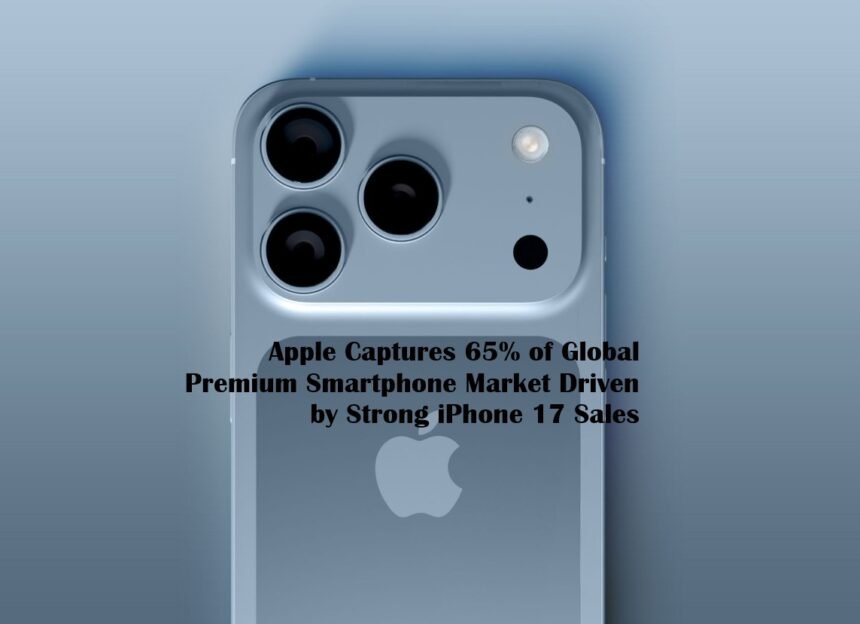
Apple secured 65% of the global premium smartphone market in the first half of 2026. Strong demand for the iPhone 17 series propelled this impressive performance. Meanwhile, the entire premium smartphone segment expanded to capture a record 29% of total global smartphone sales.
The high-end mobile sector, defined as devices with wholesale prices of $600 or higher, continues to show remarkable resilience. Consumer demand remains robust despite broader economic headwinds and global supply chain pressures. Apple’s premium unit sales grew by 9% year-over-year during this six-month period.
iPhone 17 Lineup Drives High-End Growth
The success of the iPhone 17 family served as the primary engine for Apple’s recent market surge. The standard base-model iPhone 17 attracted significant interest from consumers seeking flagship features at competitive price points. Upgraded display technologies and improved processor efficiency convinced many existing users to replace older hardware.
Apple’s premium market share climbed to 65%, up from 63% during the same period in 2025. This rebound signals renewed momentum in key western markets. However, current figures remain below the peak 74% share Apple recorded in 2022.
- iPhone 17 Base Model: High volume sales provided a massive boost to overall shipments.
- Pro Series Appeal: Advanced camera capabilities maintained high margins among power users.
- Replacement Cycles: Aging older models encouraged consumers to upgrade their mobile devices.
- Ecosystem Loyalty: Strong software integration kept user retention rates remarkably high.
Rising Component Costs Shift Consumer Habits
Rising prices for memory and critical electronic components hit low-end and mid-tier smartphones particularly hard. Manufacturers faced shrinking profit margins across budget device categories. Consequently, brands raised retail prices on mid-range devices to offset manufacturing expenses.
This pricing shift narrowed the financial gap between mid-tier Android phones and premium flagships. Many shoppers realized that spending slightly more yielded vastly superior build quality and longer software support. As a result, consumers increasingly selected older or discounted premium flagships over new mid-range options.
- Component Inflation: Higher RAM and flash storage costs forced mid-tier price hikes.
- Margin Protection: Premium manufacturers absorbed component costs through higher profit margins.
- Value Shift: Shoppers recognized better long-term value in high-end devices.
- Premium Expansion: High-end phones claimed a record 29% of all market shipments.
Intensifying Competition in the Chinese Market
While Apple expanded its lead in many regions, China remains an intense competitive battleground. Domestic Chinese manufacturers continue to launch aggressive flagship hardware designed to capture local market share. Brands such as Huawei, Xiaomi, OPPO, and vivo have refined their premium portfolios with advanced camera systems and foldable displays.
OPPO recorded an extraordinary 69% year-over-year growth in the premium space, driven by its Find series. Similarly, vivo achieved a 20% unit growth surge following strong reception for its flagship camera phones. Domestic brand loyalty in China prevented Apple from returning to its historic 74% global market share height.
- OPPO Expansion: Innovative flagship hardware drove rapid 69% growth in premium unit sales.
- vivo Imaging Focus: Specialized camera technology boosted flagship device adoption.
- Huawei Resurgence: Strong local chip development solidified domestic high-end market share.
- Xiaomi Premium Push: Higher-priced flagships successfully challenged established international brands.
Financing and Trade-In Programs Lower Barriers
Carriers and mobile manufacturers are actively lowering the financial barriers to owning flagship smartphones. Expanded trade-in allowances, interest-free monthly installment plans, and buyback guarantees make $1,000 devices accessible. Consumers now spread device payments across two or three years without incurring heavy upfront costs.
Samsung maintained its second-place position in the premium segment with a 19% market share. The South Korean tech giant expanded programs like Galaxy Forever to make its devices more affordable worldwide. Together, Apple and Samsung control a massive 84% of the global premium market.
- Carrier Promos: Trade-in offers subsidize flagship purchases for network subscribers.
- Flexible Credit: Monthly installment structures remove the burden of full retail prices.
- Samsung Stability: Samsung captured 19% share through steady Galaxy flagship demand.
- Duopoly Power: Apple and Samsung jointly dominate over four-fifths of high-end sales.
The Future Outlook for Premiumization
Industry analysts expect the smartphone industry’s shift toward high-end devices to accelerate further. Manufacturers are prioritizing profit margins and value creation over raw shipment volumes. As hardware lasts longer and software support spans multiple years, consumers view premium smartphones as durable long-term investments.
Apple remains exceptionally well positioned to maintain its global leadership. The company’s tight software ecosystem, brand prestige, and loyal customer base provide a strong competitive moat. While Chinese rivals will continue challenging Apple in regional markets, Apple’s 65% market share confirms its unmatched dominance across the global premium landscape.