



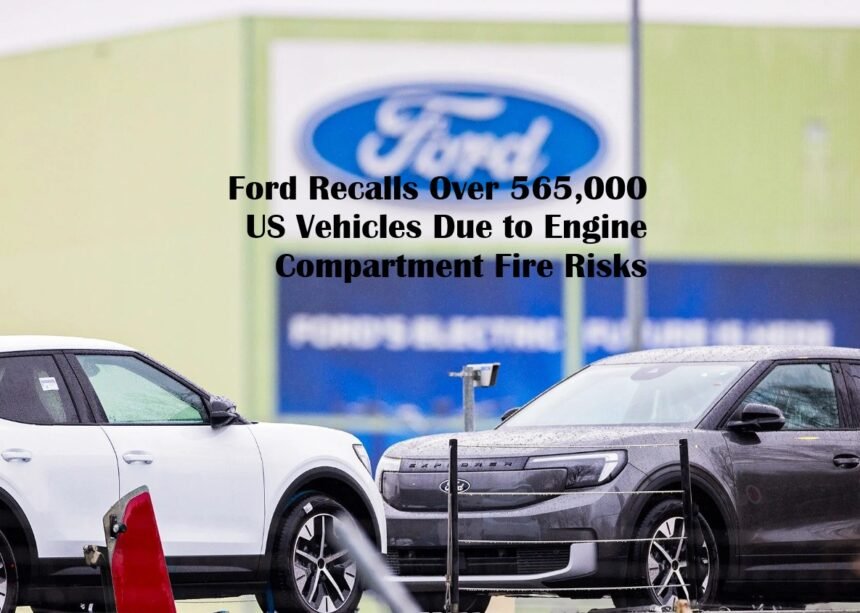
Ford Motor Company announced a massive safety recall affecting more than 565,000 vehicles across the United States. Federal safety regulators confirmed the safety action on July 24, 2026. The major American automaker issued the recall after identifying a dangerous defect in the engine compartment.
Under specific operating conditions, this mechanical fault can trigger sudden under-hood fires. The risk threatens vehicle owners, passengers, and surrounding property. The company urges drivers of affected models to remain vigilant for early warning signs of mechanical distress.
Federal highway safety officials are monitoring the situation closely to ensure full compliance. Ford engineers developed a comprehensive repair protocol to eliminate the safety hazard. Dealership technicians will inspect and repair all affected vehicles completely free of charge. This action marks one of the largest safety recalls for the manufacturer this year.
Identifying Affected Models and the Core Mechanical Defect
The massive recall encompasses several popular truck, SUV, and crossover models built over recent production years. Millions of American drivers rely on these versatile vehicles for daily commuting and heavy commercial work. Specifically, the safety recall targets vehicles equipped with specific engine configurations and fuel delivery systems.
Over time, normal engine vibrations and thermal stress can cause critical components within the engine bay to degrade prematurely. Engineers traced the root cause to a vulnerable fluid line near hot exhaust manifolds. Under heavy engine loads, cracked lines can spray flammable fluid onto blistering exhaust pipes.
When pressurized fuel or motor oil contacts glowing exhaust surfaces, immediate combustion occurs. The resulting fire can engulf the engine bay within seconds. Drivers may lose power steering, braking assistance, and engine power before flames breach the passenger cabin.
Understanding Potential Hazards and Real-World Incidents
Under-hood fires present extreme safety hazards to motorists traveling at high highway speeds. Rapidly spreading fires damage electrical wiring, disabling critical vehicle control systems unexpectedly. Furthermore, dense toxic smoke can enter the cabin through HVAC vents, disorienting the driver.
If a fire starts while the vehicle sits parked inside a residential garage, the flames can quickly spread to home structures. Automotive safety investigators reviewed numerous field reports detailing thermal events and near-miss incidents. Multiple customers reported smelling strong fuel odors or burning oil shortly before smoke emerged from under the hood.
In several instances, localized engine fires damaged surrounding engine components severely before drivers could safely stop. Fortunately, official safety reports indicate no fatal accidents linked directly to this specific mechanical defect so far. Automakers advise drivers to watch for specific red flags while operating their vehicles:
- Pungent Odors: Strong smells of raw gasoline or burning oil inside or around the vehicle cabin.
- Dashboard Alerts: Illuminating check engine lights, oil pressure warnings, or elevated temperature gauges.
- Audible Rattles: Loud popping noises or engine misfires caused by erratic fuel pressure drops.
- Visible Smoke: Wisps of white or dark smoke emerging from under the vehicle hood.
If any of these warning signs appear, drivers should immediately pull over to a safe location. Turn off the ignition, evacuate all passengers, and call local emergency services immediately.
Remedy and Inspection Protocols for Vehicle Owners
Ford is moving quickly to notify registered owners about the urgent recall campaign. Official notification letters will instruct owners to schedule service appointments at certified dealerships immediately. Dealership technicians will execute a thorough inspection of the engine bay and fuel delivery network.
If technicians detect worn or damaged fuel lines, they will replace the components with redesigned, heat-resistant parts. In addition to hardware replacements, technicians will install protective thermal shields around vulnerable fluid conduits.
These specialized physical barriers prevent flammable liquids from contacting hot exhaust components even if a leak occurs. Furthermore, software updates will optimize engine control units to detect pressure drops in fuel lines earlier. These combined remedies ensure long-term mechanical reliability and passenger safety across all recalled models.
Financial Consequences and Regulatory Oversight
Executing a recall of this scale imposes substantial financial burdens on the automaker. Sourcing hundreds of thousands of replacement parts and compensating dealership service departments requires millions of dollars in warranty expenses. Furthermore, intense media coverage surrounding fire risks can temporarily soften consumer demand for popular vehicle lines.
Corporate executives must balance these immediate financial costs against the imperative of maintaining public trust and brand loyalty. Federal highway safety administrators maintain strict oversight throughout the entire recall process. Regulatory agencies monitor completion rates to ensure the automaker reaches every affected vehicle owner efficiently.
If an automaker fails to resolve safety defects within reasonable timelines, federal authorities can impose severe financial penalties. Consequently, the company is prioritizing parts distribution to ensure dealerships can complete repairs without extended delays.
Long-Term Outlook for Automotive Quality Control
This widespread safety recall highlights the increasing complexity of modern automotive engineering. Modern engine bays pack dense arrangements of turbos, fuel lines, electrical wiring, and emission equipment into compact spaces. Operating under high temperatures and high pressures leaves very little margin for component failure. Automakers must continuously refine quality assurance protocols across their vast global supplier networks to prevent similar manufacturing defects.
For vehicle owners, staying informed about manufacturer recalls remains a fundamental aspect of car maintenance. Drivers should regularly check their vehicle identification numbers against federal safety databases to identify open recalls promptly. Completing recall repairs quickly protects passengers, extends vehicle longevity, and preserves resale value. Through transparent communication and rigorous repair standards, automakers can overcome safety setbacks and rebuild consumer confidence across the automotive marketplace.