



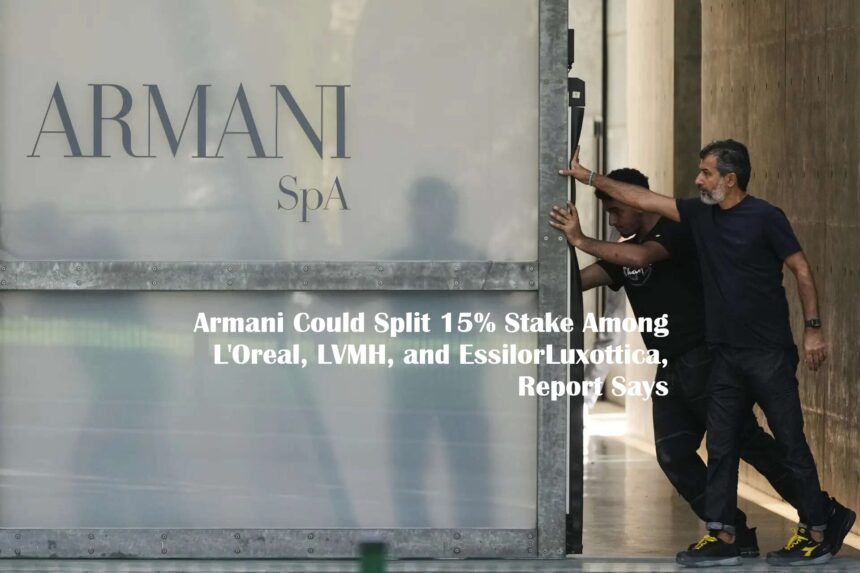
Italian fashion giant Armani may enter a new era after reports revealed plans for a potential minority stake sale. According to recent reports, the company could divide a 15% stake among three major global luxury groups. The possible buyers include L’Oreal, LVMH, and EssilorLuxottica. The move follows the death of founder Giorgio Armani in September 2025 at the age of 91.
The report signals a major shift for one of Italy’s most respected fashion houses. Giorgio Armani built the company into a global luxury empire while maintaining strict independence for decades. Industry observers now expect the company to prepare for long-term succession and future expansion.
Giorgio Armani’s Legacy Shapes the Future
Giorgio Armani spent decades building his company without outside control. He transformed the Armani brand into a symbol of elegance, tailoring, and understated luxury. The company expanded into clothing, fragrances, accessories, hotels, and eyewear.
Even after becoming one of the world’s biggest luxury labels, Armani avoided mergers and large external investments. Many luxury competitors joined multinational groups over the years, but Armani remained independent under its founder’s leadership. Reports now suggest that Armani’s will included detailed succession plans.
The document reportedly instructed heirs and executives to sell an initial 15% stake within 12 to 18 months after his death. Priority would go to selected strategic partners. The plan appears designed to preserve the brand’s stability while introducing strong global partners.
Three Luxury Giants Emerge as Preferred Buyers
L’Oreal, LVMH, and EssilorLuxottica have emerged as the preferred investors in the proposed transaction. Each company already maintains close business ties with Armani. L’Oreal manages Armani’s beauty and fragrance operations. The partnership has produced successful perfume lines and cosmetics collections for years.
Armani fragrances continue attracting younger luxury consumers worldwide. EssilorLuxottica oversees Armani’s eyewear business. The two companies renewed their licensing agreement in recent years. The collaboration strengthened Armani’s presence in premium eyewear markets across Europe, Asia, and North America.
LVMH represents a different type of partner. The French luxury conglomerate owns brands across fashion, jewelry, cosmetics, and hospitality. Analysts believe LVMH could support Armani’s long-term global growth strategy through its extensive luxury infrastructure.
Reports suggest Armani may divide the 15% stake equally among the three groups. Each company could receive around 5%. Executives reportedly believe this structure would keep all parties engaged during the early phase of negotiations.
Armani Prepares Long-Term Business Strategy
Armani executives reportedly continue preparing a five-year business plan ahead of the potential transaction. CEO Giuseppe Marsocci may appoint two advisers to oversee the process and manage discussions with investors. The strategy likely focuses on protecting Armani’s creative identity while improving future competitiveness.
Luxury markets continue changing rapidly because of digital commerce, younger consumers, and shifting global demand. Many luxury companies now invest heavily in technology, sustainability, and direct consumer experiences. Armani may require stronger partnerships to compete effectively in this environment over the next decade.
The company also faces leadership transition challenges after Giorgio Armani’s passing. Strong strategic investors could help ensure operational stability during this period.
Why LVMH Could Hold a Strong Advantage
Among the potential buyers, LVMH may hold the strongest position for a future expansion deal. The group already controls many major luxury brands and possesses deep expertise in global luxury management. Industry analysts believe LVMH could eventually support a larger acquisition if Armani’s heirs decide to reduce ownership further in the future.
Reuters previously reported that Armani’s will may allow another sale of 30% to 55% within three to five years after the initial transaction. LVMH chairman Bernard Arnault has built a reputation for acquiring prestigious heritage brands while preserving their identities.
This approach could align with Armani’s desire to protect its long-term image and creative philosophy. However, competition among the three potential investors may remain intense. Each company already benefits from existing partnerships with Armani and may seek a larger role in the future.
L’Oreal and EssilorLuxottica Bring Strategic Value
L’Oreal could gain important advantages through a stake purchase. Armani fragrances continue performing strongly in the global beauty market. Men’s fragrances especially show strong growth among younger consumers. The company may view a direct investment as a way to secure long-term access to one of luxury beauty’s strongest brands.
A closer partnership could also support future product expansion across skincare and cosmetics categories. EssilorLuxottica also maintains strong incentives to deepen its relationship with Armani. The eyewear company already operates one of the world’s largest optical and luxury eyewear businesses.
Armani premium positioning complements EssilorLuxottica’s broader luxury portfolio. A minority stake would strengthen existing licensing cooperation and potentially secure future agreements.
Independence Remains a Central Priority
Despite the possible stake sale, Armani’s leadership structure may remain largely independent for now. Reports indicate that Giorgio Armani’s foundation and trusted associates would continue holding significant voting control after the transaction. This structure appears designed to protect the company from sudden strategic changes.
Armani’s heirs and foundation representatives likely want to preserve the founder’s vision while still benefiting from external partnerships. The strategy differs from full acquisitions seen elsewhere in the luxury industry.
Instead, Armani may pursue gradual collaboration while maintaining its Italian identity and creative independence. Many luxury analysts consider this balanced approach more suitable for heritage fashion houses with strong family influence.
Luxury Industry Watches Closely
The global luxury industry continues monitoring Armani’s next steps closely. Any ownership change involving the company would carry major symbolic and financial importance. Armani remains one of the few major independent luxury brands founded and controlled by a single designer for decades.
The company’s future direction may influence broader discussions about succession planning and consolidation within the luxury sector. The possible involvement of L’Oreal, LVMH, and EssilorLuxottica also highlights the increasing overlap between fashion, beauty, and eyewear industries.
Strategic partnerships now play a larger role in global luxury growth strategies. For now, Armani has declined to comment publicly on the reports. Still, the discussions already suggest that one of fashion’s most iconic houses may soon begin a carefully managed transition into its next chapter.