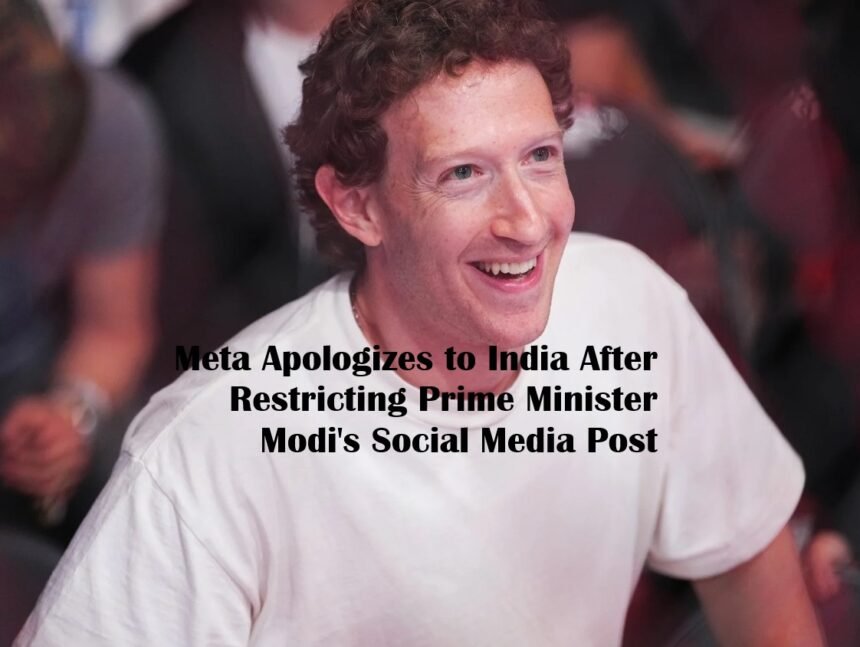
Meta Platforms issued a formal apology to the Indian government on Wednesday. The social media giant previously restricted a video post by Prime Minister Narendra Modi. This restriction triggered significant political fallout across New Delhi. Chief Global Affairs Officer Joel Kaplan conveyed the official apology. He met directly with Union Information Technology Minister Ashwini Vaishnaw. Kaplan expressed regret over the company’s operational error during the high-level meeting.
The Controversial July Post and Operational Glitch
Prime Minister Narendra Modi published a vertical video message on July 23. In the video, he spoke directly to students across the country. He promised strict government action against national examination paper leaks. Shortly after publication, Meta systems restricted access to the video post. The action temporarily removed the content from major social networking platforms.
Users across India quickly noticed the missing message and raised public concerns. Meta engineers restored the post after identifying the restriction. Company representatives explained that automated moderation tools caused an inadvertent glitch. However, officials at the Ministry of Electronics and Information Technology found that explanation unsatisfactory.
- Direct Engagement: Modi addressed national student concerns regarding exam integrity.
- System Action: Automated filters blocked the video shortly after upload.
- Rapid Restoration: Technicians restored the clip following internal reviews.
- Official Disapproval: Government leaders demanded deeper accountability from tech executives.
High-Level Diplomatic Meetings in New Delhi
To address growing government anger, Meta dispatched a senior executive delegation to India. Joel Kaplan led the corporate team during these crucial talks. He previously served as White House Deputy Chief of Staff for Policy. The executive delegation first met with Information Technology Secretary S. Krishnan. That session lasted forty-five minutes and focused on operational details. Afterwards, Kaplan met with IT Minister Ashwini Vaishnaw to deliver the formal corporate apology.
- Corporate Statement: Kaplan formally acknowledged Meta’s mistake regarding the prime minister’s post.
- Executive Presence: Top global directors joined the discussions in New Delhi.
- Ministerial Engagement: Officials discussed platform reliability and moderation standards.
- Policy Dialogue: Discussions centered on maintaining transparent digital communications.
Addressing Broader Content Moderation Lapses
During the meetings, Indian officials confronted Meta executives over broader moderation failures. Authorities highlighted concerns regarding child safety, deepfake videos, and paid promotion practices. Government leaders insisted that social platforms must eliminate harmful content quickly. Government representatives raised serious questions about paid content amplification. They noted that entities pay substantial sums to boost specific political material. Indian officials demanded equal enforcement of community standards across all user accounts.
- Child Protection: Authorities demanded strict enforcement against illegal media uploads.
- Deepfake Control: Officials urged faster detection of AI-generated misinformation.
- Promoted Posts: Regulators scrutinize paid distribution algorithms for neutrality.
- Policy Compliance: Platforms must align operational practices with local regulations.
Threats to Safe Harbor Legal Protections
The government emphasized that automated content distribution choices affect a platform’s legal status. Under Indian law, safe harbor provisions protect online intermediaries from user-generated content liability. However, active content curation could invalidate those statutory protections.
If platforms lose safe harbor status, corporate executives face potential legal liability for platform content. Lawmakers warned that active algorithmic selection moves platforms away from neutral status. Meta leadership pledged to refine internal tools to protect user expression while remaining compliant.
- Legal Protections: Safe harbor shields companies from liability for third-party uploads.
- Algorithmic Curation: Active distribution decisions weaken claims to neutral status.
- Strict Deadlines: Rules require quick removal of flagged unlawful material.
- Executive Liability: Revoking immunity exposes local representatives to legal risks.
The Strategic Importance of the Indian Digital Market
India represents Meta’s single largest global market by active user volume. Hundreds of millions of citizens use Facebook, Instagram, and WhatsApp every day. Maintaining constructive relationships with Indian regulatory authorities remains vital for company growth.
By issuing a prompt apology, Meta aims to repair trust with Indian leaders and users. The company continues upgrading its automated detection systems to prevent similar glitches. Moving forward, Meta must balance automated moderation with the nuances of high-profile political communication.