



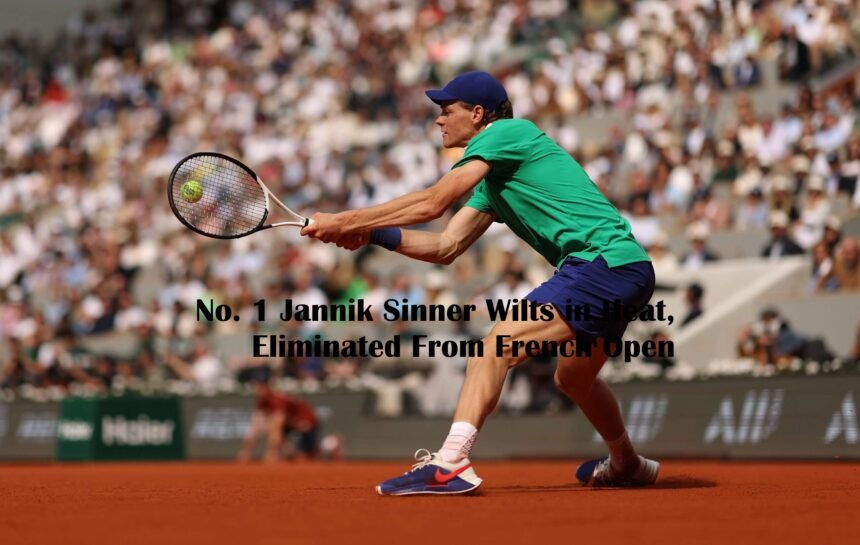
World No. 1 Jannik Sinner entered the French Open with strong momentum and high expectations. Many fans believed the Italian star could capture another Grand Slam title after his excellent performances earlier this season. Instead, his campaign ended in disappointing fashion after a physically demanding match under intense Paris heat. Sinner struggled with the difficult conditions throughout the contest.
His movement slowed, his energy dropped, and his normally sharp baseline game faded as the match progressed. The loss shocked many tennis observers because Sinner had looked dominant during the early rounds of the tournament. The defeat also highlighted the brutal physical demands of clay-court tennis, especially during long matches played under high temperatures.
High Expectations for the Top Seed
Sinner arrived in Paris as one of the strongest players on the ATP Tour. He had produced consistent results throughout the season and carried the confidence of a reigning world No. 1 player. His powerful groundstrokes, improved serve, and calm mentality made him a favorite to reach the final.
Fans and analysts expected Sinner to perform well on the clay courts of the French Open. He had improved his movement on slower surfaces and showed better patience during rallies compared with previous seasons. His early-round performances supported those expectations.
Sinner controlled matches efficiently and avoided spending unnecessary time on court. He looked fresh, focused, and ready for the tougher challenges later in the tournament. However, the physical conditions changed everything during his elimination match.
Paris Heat Changes the Match
The temperature in Paris created serious difficulties for both players. The heat slowed movement, increased fatigue, and forced longer recovery periods between points. While many players struggled during the tournament, Sinner appeared especially uncomfortable as the match continued. At the start, he still played aggressive tennis and tried to dictate rallies from the baseline.
His forehand created pressure, and his backhand remained solid during the opening set. However, signs of fatigue slowly appeared. His footwork became heavier during extended rallies. He started reaching the ball later and made more unforced errors from both wings.
The intense conditions also seemed to affect his concentration during key moments. Tennis at the highest level often becomes a battle of endurance as much as skill. On this day, the weather became one of the biggest opponents Sinner faced.
Opponent Takes Control
Sinner’s opponent recognized the physical decline and adjusted tactics effectively. Instead of rushing points, he forced longer exchanges and moved Sinner across the court repeatedly. The strategy created additional pressure on the Italian star’s legs and stamina.
As rallies became longer, Sinner struggled to maintain his usual intensity. His shots lost depth, and his serve became less dangerous. His opponent gained confidence and started attacking more aggressively. Momentum shifted completely during the middle stages of the match.
The crowd sensed the change and responded loudly after every important point. Sinner tried to regroup, but he never fully regained control. The tactical discipline from his opponent played a major role in the upset victory.
Physical Struggles Hurt Sinner
Physical endurance often decides matches on clay courts. The surface demands constant movement, patience, and mental resilience. Under extreme heat, those demands become even greater. Sinner’s body language revealed growing frustration during the later sets.
He frequently looked toward his player box and took extra time between points. His energy level clearly dropped as the match entered crucial moments. The Italian star also struggled to defend effectively. Normally, he absorbs pressure well and turns defense into attack with quick counterpunching.
This time, he could not recover position fast enough. Several important service games slipped away because of untimely mistakes. Double faults and short returns gave his opponent easy opportunities to attack. The physical decline became impossible to ignore by the final set.
Mental Pressure Builds
Being the No. 1 player in the world brings enormous expectations. Every Grand Slam match attracts heavy attention, especially when fans believe a player can win the title. Sinner entered the tournament carrying the pressure of leadership on the ATP Tour.
Many expected him to dominate the next generation of men’s tennis alongside other young stars. As the match slipped away, that pressure seemed to grow. Sinner showed visible frustration after missed opportunities and failed break points. He also reacted emotionally after several long rallies that ended against him.
Top players often succeed because they remain calm during difficult moments. On this occasion, Sinner struggled to maintain that emotional balance. The combination of heat, fatigue, and rising pressure created a difficult situation for the Italian star.
Crowd Energy Shifts Momentum
The atmosphere inside the stadium changed dramatically as the upset became more realistic. Fans responded enthusiastically whenever Sinner’s opponent produced a big shot or won a long rally. Crowd support often influences momentum in Grand Slam matches.
Players feed off the energy and use it to increase confidence during tense situations. Sinner attempted to silence the crowd with aggressive play, but his execution lacked consistency.
Several attacking shots missed the lines by small margins, and frustration continued to grow. Meanwhile, his opponent stayed composed and used the emotional momentum effectively. Every successful hold of serve increased the pressure on the world No. 1. By the closing stages, the match clearly favored the challenger.
A Difficult End to the Campaign
The final moments reflected the overall story of the match. Sinner fought hard and refused to surrender easily, but he lacked the physical sharpness needed to complete a comeback. When the final point ended, disappointment appeared immediately on his face.
The loss marked one of the biggest surprises of the tournament because many observers expected Sinner to challenge strongly for the championship. Despite the defeat, his performance earlier in the season still confirms his status as one of the elite players in men’s tennis.
One difficult afternoon does not erase the progress he has made over recent years. Still, the result will remain painful because of the opportunity he lost in Paris.
What the Loss Means for Sinner
The elimination raises important questions ahead of the remainder of the season. Sinner has shown tremendous consistency during the past year, but physical endurance under extreme conditions remains an area to monitor.
Grand Slam tournaments test every part of a player’s game. Technical skill alone rarely guarantees success. Players also need stamina, recovery ability, and emotional control during difficult matches. Sinner will likely review the match carefully with his coaching team.
They may focus on improving physical preparation for long clay-court battles and extreme weather conditions. The loss could also motivate him for future tournaments. Great champions often respond strongly after disappointing defeats.
Looking Ahead to the Grass Season
Although the French Open ended earlier than expected, Sinner still has major opportunities ahead. The ATP calendar now shifts toward grass courts, where his aggressive style can become even more effective. His strong serve and powerful groundstrokes suit faster surfaces well. Many fans already consider him one of the leading contenders for the upcoming grass-court season.
The Italian star has repeatedly shown resilience after setbacks. Previous defeats helped him improve his mental toughness and overall consistency on tour. For that reason, many tennis observers expect Sinner to recover quickly and return stronger during the next stage of the season.