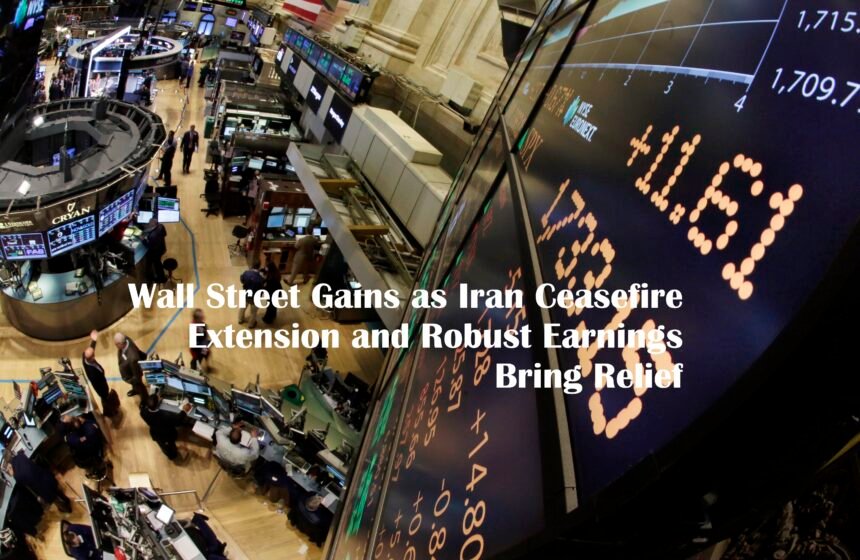
Wall Street moved higher as investors reacted to a mix of geopolitical relief and strong corporate earnings. The extension of the Iran ceasefire gave markets a sense of stability. At the same time, companies reported solid financial results, boosting confidence across sectors. Major U.S. indexes posted notable gains during the session.
The Dow Jones Industrial Average climbed significantly, while the S&P 500 and Nasdaq also advanced. These gains reflected a shift in sentiment after weeks of uncertainty tied to Middle East tensions. Investors welcomed any sign of reduced conflict. Even though risks remained, the ceasefire extension created breathing room. Markets responded quickly to that signal.
Ceasefire Extension Brings Temporary Relief
The decision to extend the ceasefire between the United States and Iran played a key role in the market rally. The move suggested that diplomatic efforts might continue, easing fears of further escalation. However, uncertainty still lingered.
Reports indicated that not all parties fully agreed to the extension. Tensions in the Strait of Hormuz continued, with disruptions affecting global oil supply routes. Despite these concerns, investors focused on the positive aspect. The extension delayed immediate conflict risks.
This allowed traders to shift attention toward economic data and corporate performance. Market participants often react strongly to geopolitical headlines. In this case, even a temporary pause in conflict helped stabilize sentiment. That stability encouraged buying activity across equities.
Strong Earnings Boost Investor Confidence
Corporate earnings provided another major driver for the market’s upward movement. Many companies delivered results that exceeded expectations. This reinforced the idea that businesses remain resilient despite global challenges. Technology and semiconductor firms led the gains.
Companies in these sectors benefited from strong demand linked to artificial intelligence and data infrastructure. Some stocks surged sharply after reporting better-than-expected earnings. Other industries also contributed to the rally. Healthcare and industrial companies reported solid performance, which supported broader market strength.
Positive earnings from multiple sectors created a sense of balance in the rally. Analysts noted that earnings growth expectations for 2026 and 2027 remain high. This outlook encouraged investors to stay optimistic about long-term performance.
Tech Sector Leads the Rally
The technology sector played a central role in driving Wall Street higher. Semiconductor stocks, in particular, gained momentum and reached record levels. This reflects ongoing demand for chips used in AI and cloud computing.
Investors continue to view technology as a key driver of growth. Companies tied to AI development attract strong interest. Their earnings potential remains high, even in uncertain economic conditions. The rally in tech stocks also influenced broader indices.
Since large technology firms hold significant weight in the S&P 500 and Nasdaq, their gains pushed overall market performance higher. This trend underscores the growing significance of innovation in shaping financial markets. As AI adoption expands, tech companies remain at the center of investor focus.
Energy Prices Remain a Key Risk
While markets celebrated gains, concerns about energy prices persisted. Oil prices stayed elevated due to ongoing tensions in the Middle East. This created pressure on certain industries, especially airlines and transportation. High fuel costs can reduce profit margins for many companies. Some firms already signaled caution in their earnings outlooks due to rising expenses.
The situation in the Strait of Hormuz remains critical. Any disruption in this region can affect global oil supply and pricing. Investors continue to monitor developments closely. Despite these risks, the market maintained its upward trajectory. Strong earnings helped offset concerns about energy costs, at least in the short term.
Market Sentiment Turns Positive
The combination of geopolitical relief and earnings strength shifted market sentiment. Investors appeared more willing to take risks. This resulted in increased buying across multiple sectors. Many analysts believe that markets had already priced in worst-case scenarios related to the conflict. The ceasefire extension reduced those fears, even if only temporarily.
At the same time, economic data supported optimism. Consumer spending remained steady, and corporate profits showed resilience. These factors strengthened confidence in the broader economy. Global investors also returned to U.S. equities in recent weeks. Strong performance and growth potential attracted capital flows back into the market.
Remaining Uncertainty in the Background
Despite the rally, uncertainty has not disappeared. The ceasefire remains fragile, and geopolitical tensions could resurface at any time. Iran’s actions in the region continue to raise concerns. Reports of ship seizures and ongoing military presence highlight unresolved issues. Markets may react quickly if tensions escalate again. Investors understand that current stability might not last.
In addition, inflation remains a concern. High energy prices could push costs higher across the economy. This might affect both consumers and businesses in the coming months. These risks suggest that volatility could return. Market gains depend on continued positive developments in both geopolitics and corporate performance.
Looking Ahead: Earnings and Global Developments
Investors now turn their attention to upcoming earnings reports. The current season plays a critical role in shaping market expectations. Strong results could support further gains. Weak performance might trigger corrections. Technology companies will remain under close watch. Their earnings often set the tone for the broader market.
Geopolitical developments will also influence market direction. Any progress toward a lasting agreement with Iran could strengthen investor confidence. On the other hand, renewed conflict could reverse recent gains. Analysts suggest that markets will stay sensitive to headlines. Both economic data and global events will shape trading patterns in the near term.