



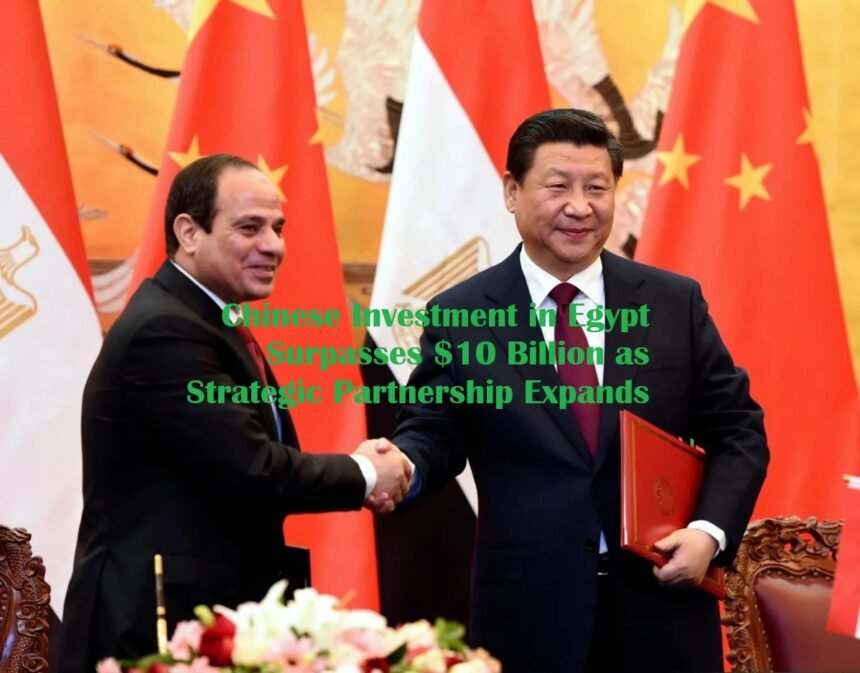
Total Chinese investment in Egypt has officially crossed the $10 billion threshold. This milestone underscores a rapidly deepening economic partnership between Cairo and Beijing, driven by expanding industrial development, strategic infrastructure projects, and trade initiatives. Egyptian Prime Minister Mostafa Madbouly announced the benchmark during a high-level government meeting in Cairo.
Officials convened for the third session of the Ministerial Committee for China Affairs to review progress under the Egypt-China Comprehensive Strategic Partnership. The meeting highlighted growing confidence among Chinese investors in Egypt’s business environment and long-term economic stability.
Strengthening Strategic Cooperation Across Key Industries
Prime Minister Madbouly emphasized that thousands of Chinese companies now operate across various sectors of the Egyptian economy. This corporate presence spans manufacturing, telecommunications, transport, and renewable energy. Foreign direct investment flows directly align with Egypt’s broader national development strategy to expand industrial capacity and boost local production. Government representatives assessed a large pipeline of prospective projects during the ministerial discussions.
Proposed initiatives cover seawater desalination, advanced technology localization, chemical processing, engineering industries, and specialized agricultural technology. These joint projects aim to diversify Egypt’s industrial output while strengthening technical knowledge transfer.
- Technology Transfer: Chinese firms share technical expertise to build local manufacturing capability.
- Infrastructure Growth: Collaborative projects focus on transport links, ports, and communications networks.
- Clean Energy Expansion: Investments target solar, wind, and industrial water desalination systems.
- Export Localization: Domestic production replaces imports while expanding Egyptian exports globally.
The Suez Canal Economic Zone as an Industrial Anchor
A primary catalyst behind this investment boom involves the strategic position of the Suez Canal Economic Zone (SCZone). Located along one of the world’s most vital maritime trade routes, the SCZone serves as a central manufacturing hub for Chinese enterprises. Major corporations use Egyptian facilities to produce goods for distribution across African, Middle Eastern, and European consumer markets. Manufacturing inside Egypt allows Chinese companies to streamline supply chains while accessing preferential regional trade agreements.
Simultaneously, Egypt benefits from domestic job creation, increased foreign currency inflows, and modern industrial facilities. This mutual commercial alignment transforms the SCZone into a thriving international industrial corridor.
- Global Gateway: Facilities in Egypt provide direct maritime routes to global consumer markets.
- Job Creation: Industrial facilities employ thousands of skilled Egyptian workers.
- Trade Efficiency: Local manufacturing reduces freight transit times and shipping costs.
- Market Expansion: Companies utilize regional trade deals to access broader African markets.
Expanding New Horizons in Mining, Clean Energy, and Technology
The recent ministerial review highlighted several expanding sectors beyond traditional manufacturing. Mining has emerged as a promising frontier for bilateral collaboration. Officials are discussing joint ventures to explore and process mineral resources, including phosphate deposits and industrial raw materials across Egypt’s Eastern Desert.
Clean energy represents another major growth engine. Joint projects focus on green hydrogen production, solar panel manufacturing, and large-scale water desalination infrastructure. In agriculture, both nations are working to scale up technical farming capabilities and increase the volume of Egyptian agricultural exports entering the Chinese market.
- Mining Potential: Joint projects unlock value from domestic mineral and phosphate deposits.
- Green Hydrogen: Energy investments focus on clean power generation and sustainable fuels.
- Agritech Alliances: Specialized agricultural projects enhance crop yields and export volumes.
- Telecom Platforms: Strategic tech alliances modernize digital communications infrastructure.
Economic Outlook and Future Long-Term Trajectory
The achievement of surpassing $10 billion in capital accumulation marks a major turning point in Egypt-China diplomatic and economic relations. Cabinet spokesperson Mohamed El-Homsany noted that government entities are coordinating closely to streamline administrative procedures for investors.
Fast-tracking project execution ensures that proposed initiatives move smoothly from planning stages to operational reality. As the Egypt-China Comprehensive Strategic Partnership matures, both nations continue to build a durable model for South-South economic cooperation. Heavy capital investments in infrastructure, technology localization, and green energy lay a solid foundation for sustainable growth. Egypt’s position as a regional economic power and manufacturing hub stands significantly strengthened as global commercial ties expand.